Whitening Mouthwash vs. Whitening Toothpaste: Which Delivers Better Results?
By Therabreathshop | Published: 2026-06-13
Category: How-to Guides
Discover the differences between whitening mouthwash and whitening toothpaste. Learn which option works best for stain removal, brightening, and a complete bright smile routine.
A bright, white smile is one of the most sought-after beauty goals. With countless whitening products on the market—from strips and pens to specialized rinses and pastes—it can be confusing to know where to start. Two of the most common options are whitening mouthwash and whitening toothpaste. But which one actually delivers better results? In this teeth whitening comparison, we’ll break down how each product works, their strengths and limitations, and how to combine them for your ideal bright smile routine.
How Whitening Toothpaste Works
Whitening toothpaste is designed to remove surface stains from your teeth through mild abrasives and chemical agents. Most formulas contain gentle polishing ingredients like silica or calcium carbonate, which physically scrub away discoloration caused by coffee, tea, red wine, and tobacco. Some also include low concentrations of hydrogen peroxide or carbamide peroxide to chemically lighten deeper stains over time.
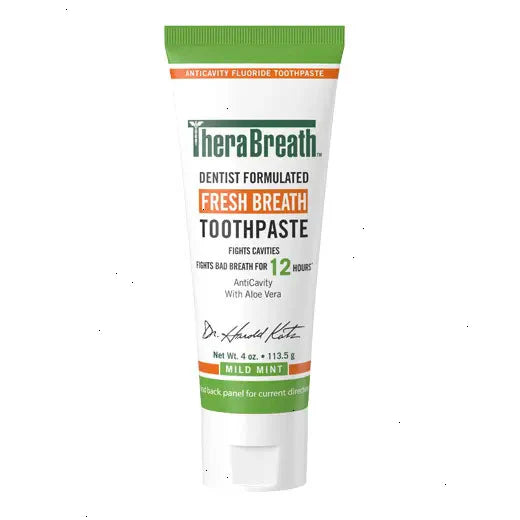
Because toothpaste is applied directly to your teeth with a toothbrush, it has more contact time and mechanical action than a rinse. This makes it effective for everyday stain removal and maintaining whiteness after professional treatments. For example, TheraBreath Whitening Toothpaste, Peroxide-Free & Anticavity, Dazzling Mint uses a peroxide-free formula that relies on natural polishing agents to lift stains while also providing fluoride for cavity protection—ideal for those who want gentle whitening without sensitivity.
Pros of Whitening Toothpaste
- Daily stain removal – Removes surface discoloration from food and drink.
- Strengthens enamel – Many formulas include fluoride for anticavity benefits.
- Gentle on gums – Proper brushing minimizes irritation compared to some abrasive strips.
- Wide availability – Easy to incorporate into your existing routine.
Cons of Whitening Toothpaste
- Limited on deep stains – Cannot lighten intrinsic discoloration from aging or medication.
- Requires consistent use – Results take weeks to become visible.
- Potential for enamel wear – Overly abrasive formulas can erode enamel over time.
How Whitening Mouthwash Works
Whitening mouthwash typically uses chemical agents like hydrogen peroxide or sodium hexametaphosphate to whiten teeth. These ingredients penetrate the enamel’s microscopic pores to break down stain molecules. Because mouthwash is a liquid, it reaches areas that a toothbrush might miss, such as between teeth and along the gumline. Many whitening rinses are also alcohol-free to prevent dryness and irritation.
A good example is the TheraBreath Complete Mouthwash, 6-in-1 Benefits, Alcohol-Free, Revitalizing Mint, which not only helps whiten but also fights bad breath, plaque, and gingivitis. Its peroxide-free formula makes it suitable for sensitive mouths, while still delivering noticeable brightening effects over time.
Pros of Whitening Mouthwash
- Whole-mouth coverage – Reaches crevices a toothbrush cannot.
- Convenient – Quick swish after brushing or between meals.
- Gentle on enamel – No abrasive particles, reducing wear risk.
- Multi-tasking – Often includes antimicrobial ingredients for gum health.
Cons of Whitening Mouthwash
- Low contact time – Typically swished for only 30–60 seconds.
- Less effective on stubborn stains – Needs consistent daily use for gradual lightening.
- Not a standalone solution – Best paired with a toothpaste for optimal results.
Teeth Whitening Comparison: Which Is More Effective?
When comparing whitening mouthwash vs. whitening toothpaste, it’s important to understand that they work on different levels. Toothpaste excels at removing surface stains through physical abrasion, while mouthwash targets deeper discoloration via chemical action. Neither is a quick fix, but both can contribute to a noticeably brighter smile when used consistently.
| Factor | Whitening Toothpaste | Whitening Mouthwash |
|---|---|---|
| Primary mechanism | Physical abrasion + mild chemicals | Chemical oxidation + stain-binding |
| Stain type targeted | Surface stains (coffee, tea, tobacco) | Deeper stains (age, food dyes) |
| Speed of results | Faster for surface stains (2–3 weeks) | Slower, but helps maintain whiteness |
| Enamel safety | Moderate (if overly abrasive) | High (alcohol-free, non-abrasive) |
| Convenience | Part of brushing routine | Additional step, but quick |
For the best results, most dentists recommend using both. A whitening toothpaste provides the mechanical cleaning needed to remove daily buildup, while a whitening mouthwash reaches areas a brush can’t and helps maintain brightness between brushings. This combined approach forms the foundation of an effective bright smile routine.
Who Should Choose Whitening Toothpaste?
Whitening toothpaste is ideal if you:
- Drink coffee, tea, or red wine regularly
- Want visible results in a few weeks
- Prefer a simple routine without extra steps
- Have sensitive teeth and need a gentle option (look for peroxide-free formulas like TheraBreath Whitening Toothpaste)
Who Should Choose Whitening Mouthwash?
Whitening mouthwash is a better fit if you:
- Have trouble reaching all tooth surfaces with a brush
- Want to freshen breath while whitening
- Prefer a non-abrasive method
- Are looking for an easy addition to your existing routine
Building a Complete Bright Smile Routine
For maximum effectiveness, combine both products in a daily regimen. Start by brushing with a whitening toothpaste for two minutes, then follow up with a whitening mouthwash for 30–60 seconds. This dual approach tackles both surface and deeper stains while also promoting gum health and fresh breath. Consider using a bundle to simplify your purchase—the TheraBreath Fresh Breath Oral Rinse & Whitening Toothpaste Bundle pairs a peroxide-free toothpaste with an alcohol-free mouthwash for a comprehensive whitening and breath-freshening solution.
Remember that consistency is key. Even the best products will not yield overnight results; you’ll typically see noticeable improvement after two to four weeks of daily use. Avoid over-brushing or using too much product, as this can lead to enamel wear or gum irritation.
When to See a Professional
If you have deep intrinsic stains—from tetracycline, fluorosis, or trauma—over-the-counter whitening may not be sufficient. In such cases, consult a dentist for professional treatments like in-office bleaching or custom trays. However, for most people, a combination of whitening toothpaste and mouthwash provides excellent results without the cost or sensitivity of professional procedures.
Conclusion: The Best of Both Worlds
In the battle of whitening mouthwash vs. whitening toothpaste, there is no clear winner. Each has unique strengths that complement the other. Toothpaste handles surface stains with mechanical action, while mouthwash reaches deeper and protects overall oral health. Together, they form a powerful duo for teeth whitening comparison and stain removal.
For a convenient, effective start, explore the TheraBreath Fresh Breath Oral Rinse & Whitening Toothpaste Bundle—it gives you both products in one package, so you can begin your bright smile routine today.