TheraBreath Kids vs. Adult Mouthwash: What’s Different and Why It Matters for Your Family
By Therabreathstore | Published: 2026-05-30
Category: Product Reviews
Discover the key differences between TheraBreath kids and adult mouthwash, including safety, ingredients, and flavors. Learn why choosing the right formula matters for your child's dental health.
Choosing the right mouthwash for your family can feel overwhelming, especially when you're trying to balance effectiveness with safety. TheraBreath offers a range of alcohol-free, dentist-formulated oral rinses for both kids and adults, but the two lines are not interchangeable. Understanding the differences between TheraBreath kids mouthwash and adult formulas is crucial for protecting your child's developing teeth and ensuring they develop healthy oral hygiene habits. In this guide, we'll break down the key distinctions in ingredients, fluoride content, flavor profiles, and safety considerations, so you can make an informed choice for every member of your household.
Why Age-Specific Mouthwash Matters for Children
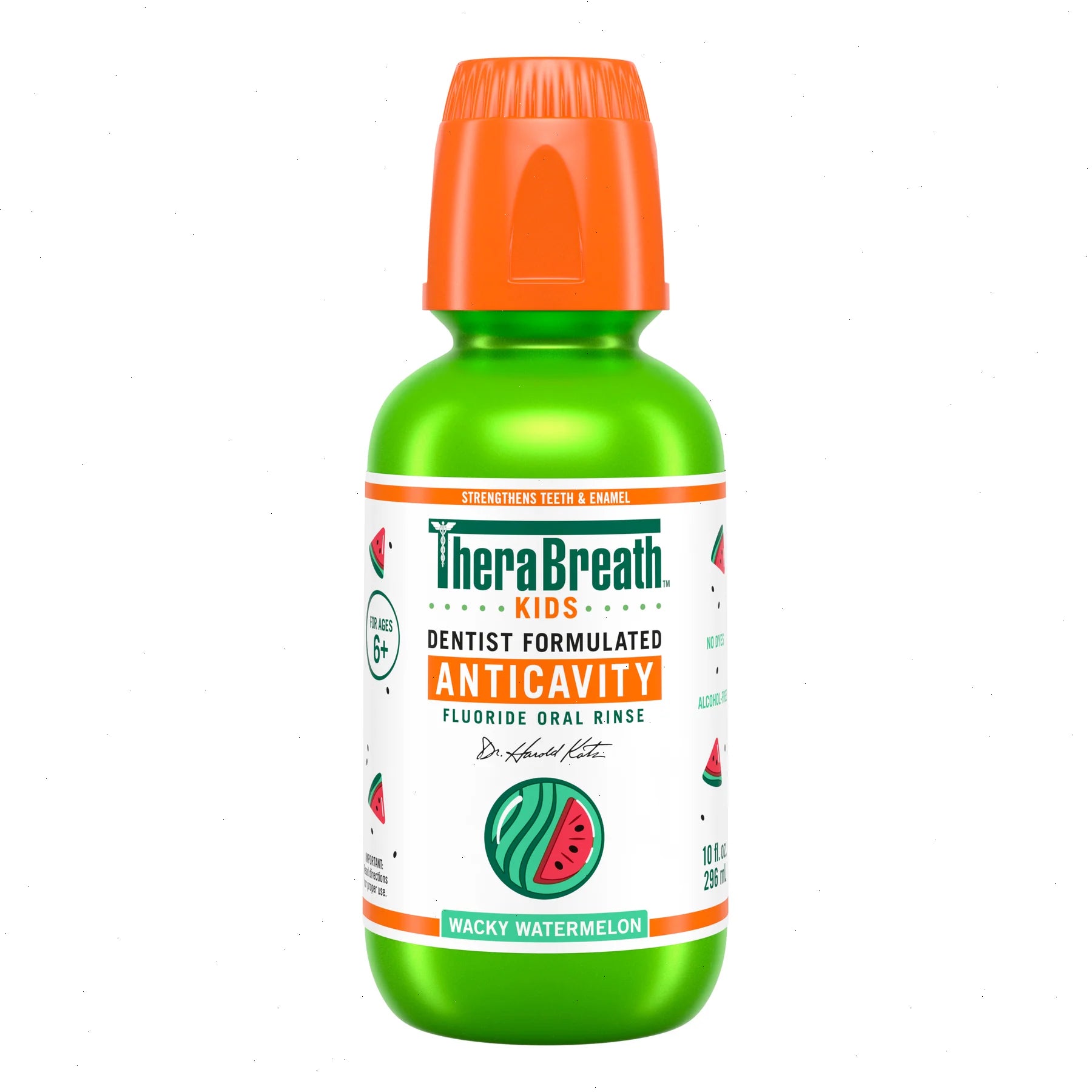
Children's mouths are not simply smaller versions of adult mouths. Their enamel is thinner and more porous, making them more susceptible to cavities and sensitivity. Additionally, young children may accidentally swallow mouthwash, which introduces safety concerns around alcohol and high concentrations of active ingredients. The American Dental Association (ADA) recommends that children under the age of six should not use mouthwash unless directed by a dentist, due to the risk of swallowing. For older children, choosing a formula designed specifically for their needs—such as For Kids! Anticavity Oral Rinse - Wacky Watermelon—can provide cavity protection without the harshness of adult-strength rinses.
Key Differences Between TheraBreath Kids and Adult Mouthwash
1. Fluoride Concentration and Anticavity Protection
Both TheraBreath kids and adult mouthwashes contain fluoride for anticavity protection, but the concentration may vary. TheraBreath's adult formulas, such as Anticavity Oral Rinse - Sparkle Mint, typically contain 0.05% sodium fluoride (225 ppm fluoride ion), which is the standard for over-the-counter mouthwashes. The kids' version also contains fluoride at a similar level, but the formulation is often gentler on delicate enamel. The key takeaway: both provide effective cavity prevention, but the kids' rinse is designed to be less irritating and more palatable for young mouths.
2. Alcohol-Free Formula Across the Board
One of the hallmarks of TheraBreath is that all their mouthwashes—both kids and adult—are alcohol-free. This is a major advantage for children, as alcohol-based mouthwashes can cause a burning sensation, discourage regular use, and pose a poisoning risk if swallowed. TheraBreath uses CPC (cetylpyridinium chloride) and other gentle ingredients to fight bad breath and plaque without alcohol. This makes the entire line suitable for families, but the kids' rinse goes a step further by using milder surfactants and natural sweeteners.
3. Flavor Profiles and Appeal
Adult mouthwashes often feature minty, herbal, or spicy flavors like peppermint, spearmint, or cinnamon. While these can be refreshing for adults, they can be overwhelming or even unpleasant for children. TheraBreath's kids' line, on the other hand, uses fun, kid-friendly flavors like Wacky Watermelon, which is sweet and mild. This flavor is specifically designed to encourage children to use mouthwash willingly, turning a chore into a treat. No adult mouthwash can replicate that appeal, which is why parents often find that a dedicated kids' product leads to better compliance.
4. pH Balance and Enamel Safety
Both kids and adult formulas are pH-balanced to be gentle on enamel, but the kids' rinse is formulated with a slightly higher pH to minimize any potential erosion risk for thinner enamel. Adult formulas, while still safe, may contain a bit more acidity from flavoring agents or preservatives. For children who may have sensitive teeth or early signs of demineralization, the kids' rinse offers an extra layer of protection.
When Can a Child Transition to Adult Mouthwash?
There is no hard-and-fast rule, but most dental professionals suggest that children can start using adult mouthwash around age 12, when their permanent teeth are fully erupted and their swallowing reflex is mature. However, if your child is comfortable with the adult formula and does not experience any burning or sensitivity, an earlier transition may be fine. TheraBreath's adult formulas are still alcohol-free and gentle, so they are much safer than traditional mouthwashes. If your child has braces or other orthodontic appliances, you might consider a product like TheraBreath Healthy Gums Oral Rinse & Toothpaste Bundle for added gum protection, but always consult your dentist first.
Safety Considerations for Children's Oral Rinse
- Supervise use: Children under 12 should use mouthwash under adult supervision to ensure they spit and don't swallow.
- Use the correct amount: For kids, a 10-ml capful (or as directed) is usually sufficient. Overuse can lead to fluorosis in young children.
- Check for allergies: Some children may be sensitive to natural flavors or sweeteners. TheraBreath kids' rinse uses natural flavors, but always check the label.
- Pair with proper brushing: Mouthwash is not a substitute for brushing and flossing. For best results, have your child brush with a fluoride toothpaste first, then rinse.
How to Choose the Best Mouthwash for Your Child
When selecting a mouthwash for your child, consider the following factors:
| Factor | Kids Mouthwash (e.g., Wacky Watermelon) | Adult Mouthwash (e.g., Sparkle Mint) |
|---|---|---|
| Age recommendation | 6+ | 12+ |
| Fluoride content | ~225 ppm | ~225 ppm |
| Alcohol content | 0% | 0% |
| Flavor | Sweet, fruity (watermelon) | Minty, refreshing |
| Enamel protection | Extra gentle for thin enamel | Standard for adult enamel |
| Swallowing safety | Lower risk with supervision | Low risk but higher concentration |
If your child is over 6 and can reliably spit, a kids-specific formula like For Kids! Anticavity Oral Rinse - Wacky Watermelon is the best choice. It offers the same fluoride protection as adult rinses but with a gentler taste and formulation that encourages daily use.
Common Myths About Kids and Mouthwash
Myth: All mouthwashes are the same, so kids can use adult products.
Reality: As we've discussed, flavor, pH, and ingredient concentrations differ. Kids' rinses are designed to be more palatable and less irritating, which increases compliance.
Myth: Alcohol-free mouthwash is not effective for kids.
Reality: TheraBreath's alcohol-free formulas are highly effective at reducing plaque and gingivitis because they use CPC and fluoride, not alcohol. Alcohol is not necessary for efficacy.
Myth: Mouthwash is only for bad breath.
Reality: Mouthwash plays a crucial role in cavity prevention and gum health. For children, using a fluoride rinse can reduce cavities by up to 30% when combined with brushing.
Final Thoughts: Making the Right Choice for Your Family
Understanding the differences between TheraBreath kids mouthwash and adult formulas helps you choose a product that is both safe and effective for your child. The kids' line is not just a marketing gimmick—it is a scientifically formulated product that accounts for children's unique dental needs, including thinner enamel, sensitive taste buds, and the risk of swallowing. By selecting a dedicated kids' rinse, you set your child up for a lifetime of healthy habits without compromising on cavity protection.
Ready to upgrade your family's oral care routine? Explore our full range of kid-friendly options and start your child on the path to fresh breath and strong teeth today. Shop For Kids! Anticavity Oral Rinse - Wacky Watermelon and make brushing fun again.