How to Treat Bad Breath After Morning Coffee: Immediate and Long-Term Solutions with TheraBreath
By Therabreathshop | Published: 2026-06-21
Category: How-to Guides
Discover why coffee causes bad breath and learn effective remedies. From immediate rinses to long-term routines, explore TheraBreath products for fresh breath all day.
For many of us, that first cup of morning coffee is a sacred ritual. The rich aroma, the warm comfort, the gentle buzz of caffeine—it's the perfect start to the day. But there's a downside that even the finest roast can't fix: the dreaded coffee breath. That stale, bitter aftertaste and lingering odor can sabotage your confidence just as you're heading into work or meeting friends. In this comprehensive guide, we'll explore why coffee causes bad breath, how to neutralize it instantly, and how to build a long-term oral care routine that keeps your mouth feeling fresh and clean. We'll also highlight how targeted TheraBreath products can help you tackle coffee breath at its source—without harsh chemicals or alcohol.
Why Does Coffee Cause Bad Breath?
Understanding the root cause of coffee breath is the first step to finding the right remedy. Coffee isn't just a beverage; it's a complex mixture of compounds that affect your mouth in multiple ways:
1. Sulfur Compounds in Coffee
Coffee contains sulfur-containing compounds like hydrogen sulfide and methyl mercaptan, which are released during roasting. These same compounds are responsible for the characteristic smell of bad breath (halitosis). When you drink coffee, these compounds coat your tongue and oral tissues, creating an immediate odor that can last for hours.
2. Dehydration Effect
Caffeine is a diuretic, meaning it promotes fluid loss. After drinking coffee, your mouth can become drier than usual. Saliva is your mouth's natural cleanser—it washes away food particles, neutralizes acids, and fights bacteria. When saliva production drops, bacteria thrive, producing even more volatile sulfur compounds (VSCs) that cause bad breath.
3. Acidity and Enamel Erosion
Coffee is acidic, with a pH around 5. This acidity can erode tooth enamel over time, creating tiny pits where bacteria and coffee residues can hide. The acidic environment also encourages the growth of odor-causing bacteria, making coffee breath a persistent problem.
4. Dry Mouth and Morning Breath
If you're already dealing with morning breath—common after a night's sleep when saliva flow is low—coffee can compound the issue. The combination of dry mouth from sleep and the dehydrating effect of coffee creates a perfect storm for halitosis.
Immediate Solutions for Coffee Breath
When you need fresh breath quickly—say, before a morning meeting or a coffee date—try these immediate remedies:
Drink Water First
Before you even sip your coffee, drink a glass of water. This hydrates your mouth and stimulates saliva production. After coffee, drink another glass of water to rinse away coffee residues and rehydrate. It's the simplest, most effective immediate solution.
Chew Sugar-Free Gum or Mints
Chewing stimulates saliva flow, which helps neutralize coffee breath. Look for products with natural ingredients like xylitol, which also fights bacteria. TheraBreath offers a range of lozenges and gums designed to freshen breath without relying on alcohol or harsh chemicals.
Use an Alcohol-Free Mouthwash
Alcohol-based mouthwashes can dry out your mouth further, making coffee breath worse. Instead, reach for an alcohol-free, oxygenating rinse that neutralizes VSCs rather than just masking them. TheraBreath's Fresh Breath Oral Rinse - Mild Mint is a perfect choice: it uses a patented oxygenating formula to eliminate odor-causing bacteria without alcohol, leaving your mouth feeling clean and hydrated.
Brush Your Tongue
Your tongue is a prime hiding spot for bacteria and coffee residue. After drinking coffee, gently brush your tongue with a tongue scraper or the bristles of your toothbrush. This physically removes the coating that traps odor-causing compounds.
Long-Term Strategies for Fresh Breath All Day
While immediate fixes help in a pinch, a consistent oral care routine is the real key to preventing and managing coffee breath. Here's how to build a routine that works for coffee drinkers:
Upgrade Your Toothpaste
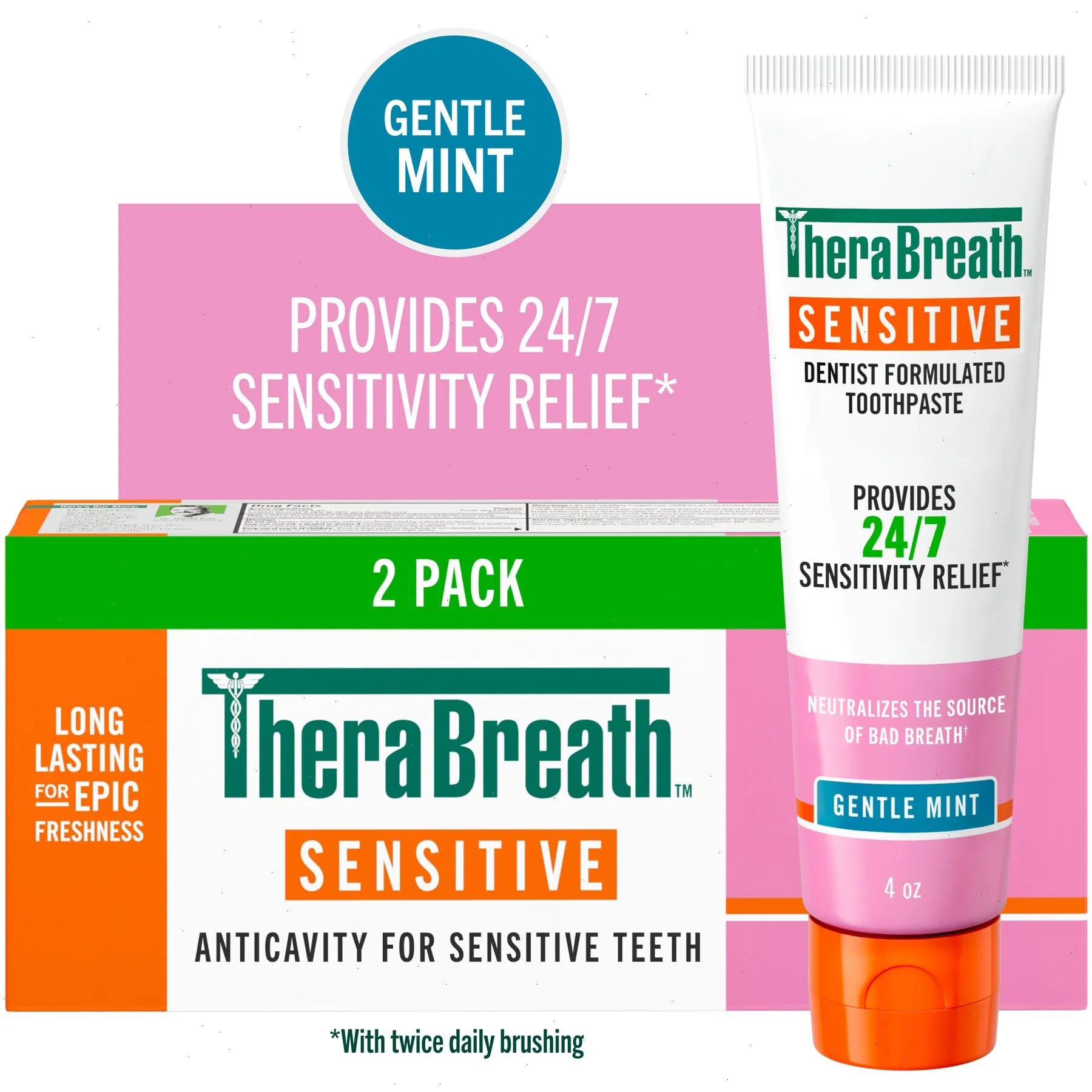
Standard toothpaste may not fully address the bacteria and acidity that coffee leaves behind. Look for a toothpaste that's sulfate-free and alcohol-free, with fluoride for cavity protection and natural ingredients that fight bacteria. TheraBreath's TheraBreath Sensitive Toothpaste, 24/7 Sensitivity Relief is an excellent option for coffee drinkers—it provides relief from sensitivity (common with acidic foods and drinks) while delivering fluoride protection and a gentle mint taste that won't clash with your coffee.
Incorporate a Targeted Oral Rinse
For coffee drinkers, a mouthwash that specifically targets odor-causing bacteria is essential. TheraBreath's Fresh Breath Oral Rinse comes in several varieties, including Fresh Breath Oral Rinse - Invigorating Icy Mint, which provides a refreshing coolness that can help counteract coffee breath. Its oxygenating formula neutralizes VSCs at the source, leaving your mouth fresh for hours.
Consider a Bundle for Complete Care
To streamline your routine and save money, consider a bundle that pairs a rinse with a toothpaste. TheraBreath offers several bundles designed for different needs. For example, the TheraBreath Fresh Breath Oral Rinse & Whitening Toothpaste Bundle combines the power of an oxygenating rinse with a whitening toothpaste that gently removes coffee stains—a double win for coffee lovers.
Stay Hydrated Throughout the Day
Carry a water bottle and sip regularly, especially between coffee refills. Water not only keeps your mouth moist but also helps wash away food particles and bacteria. If you're in a dry environment (like an air-conditioned office), consider using a humidifier at night to maintain moisture levels in your mouth.
Watch What You Eat
Certain foods can exacerbate coffee breath. Avoid combining coffee with dairy products (which can produce more sulfur compounds) or strongly flavored foods like garlic and onions. Instead, snack on crunchy fruits and vegetables like apples, carrots, or celery, which naturally scrub your teeth and stimulate saliva production.
The Role of TheraBreath in Your Coffee Breath Routine
TheraBreath products are uniquely suited to coffee drinkers because they focus on the root cause of bad breath: volatile sulfur compounds. Unlike conventional mouthwashes that mask odor with strong flavors or alcohol (which dries out the mouth), TheraBreath uses an oxygenating formula that literally oxidizes and neutralizes VSCs. This means you're not just covering up coffee breath—you're eliminating it.
Here's a quick comparison of how TheraBreath differs from typical mouthwashes:
| Feature | Typical Mouthwash | TheraBreath |
|---|---|---|
| Alcohol content | Often high (20-26%) | Alcohol-free |
| Primary action | Mask odor with mint/menthol | Neutralize VSCs at the source |
| Effect on dry mouth | Can worsen dryness | Hydrates and soothes |
| Enamel safety | May contain acids | pH-balanced, gentle |
| Longevity of fresh breath | Short-lived (30-60 min) | Up to 12 hours |
Step-by-Step Morning Routine for Coffee Lovers
To maximize your fresh breath after coffee, follow this routine each morning:
- Wake up and hydrate: Drink a full glass of water before anything else. This jumpstarts your saliva production and rehydrates your mouth after sleep.
- Brush your teeth: Use a gentle, sulfate-free toothpaste like TheraBreath Sensitive Toothpaste. Brush for two full minutes, paying extra attention to your tongue and the roof of your mouth.
- Rinse with TheraBreath: Swish with an alcohol-free rinse like Fresh Breath Oral Rinse - Mild Mint for 30 seconds. This oxygenates your mouth and eliminates morning breath bacteria before you even drink coffee.
- Enjoy your coffee: Sip your coffee normally, but try to avoid sipping it over a long period. The longer coffee sits in your mouth, the more time bacteria have to interact with its compounds.
- Post-coffee rinse: After your last sip, rinse your mouth with water or use a TheraBreath rinse again. If you're on the go, carry a travel-size bottle or use a TheraBreath lozenge to stimulate saliva.
- Stay hydrated: Keep a water bottle at your desk and sip throughout the morning. If you have another cup of coffee, follow it with a glass of water.
Additional Tips for Coffee Drinkers
- Choose a lighter roast: Dark roasts tend to have higher concentrations of odor-causing compounds. Light roasts are gentler on breath.
- Add a splash of milk: Dairy products contain casein, which can bind to some of the tannins in coffee, reducing their impact on breath. However, be cautious if you're lactose intolerant, as dairy can also contribute to bad breath in some people.
- Avoid adding sugar: Sugar feeds bacteria in your mouth, increasing VSC production. Use a natural sweetener like stevia or drink your coffee black.
- Use a straw: Drinking through a straw minimizes contact between coffee and your teeth and tongue, reducing odor.
When to See a Dentist
If you've tried these remedies and still struggle with persistent bad breath, it's a good idea to schedule a dental checkup. Chronic halitosis can be a sign of underlying issues like gum disease, tooth decay, or dry mouth syndrome. A dentist can help identify the root cause and recommend professional treatments or specialized products.
Final Thoughts: Fresh Breath Starts with the Right Products
You don't have to give up your morning coffee to enjoy fresh breath. With the right knowledge and tools, you can neutralize coffee breath at its source and keep your mouth feeling clean and confident all day. TheraBreath's alcohol-free, oxygenating formulas are specifically designed to tackle the volatile sulfur compounds that cause bad breath—including the ones found in coffee. By incorporating a targeted rinse into your routine, you can enjoy your favorite brew without worrying about the odor.
Ready to take control of your breath? Explore the Fresh Breath Oral Rinse - Mild Mint today and discover how a simple switch can make all the difference. Your morning coffee will thank you—and so will everyone around you.